


Junior athletes are training harder than ever. Most of them are doing it under-fuelled. Andy Moore, R&D Manager at NPL, explains why hydration guidance for young players cannot just focus on “drink water and avoid energy drinks.”
Picture a school rugby squad mid-week. They are sprinting, tackling, absorbing contact and doing it on a loop. The coach is watching every movement. The manager has the match schedule. Someone is tracking minutes on the field. But is anyone tracking what thekids are drinking?
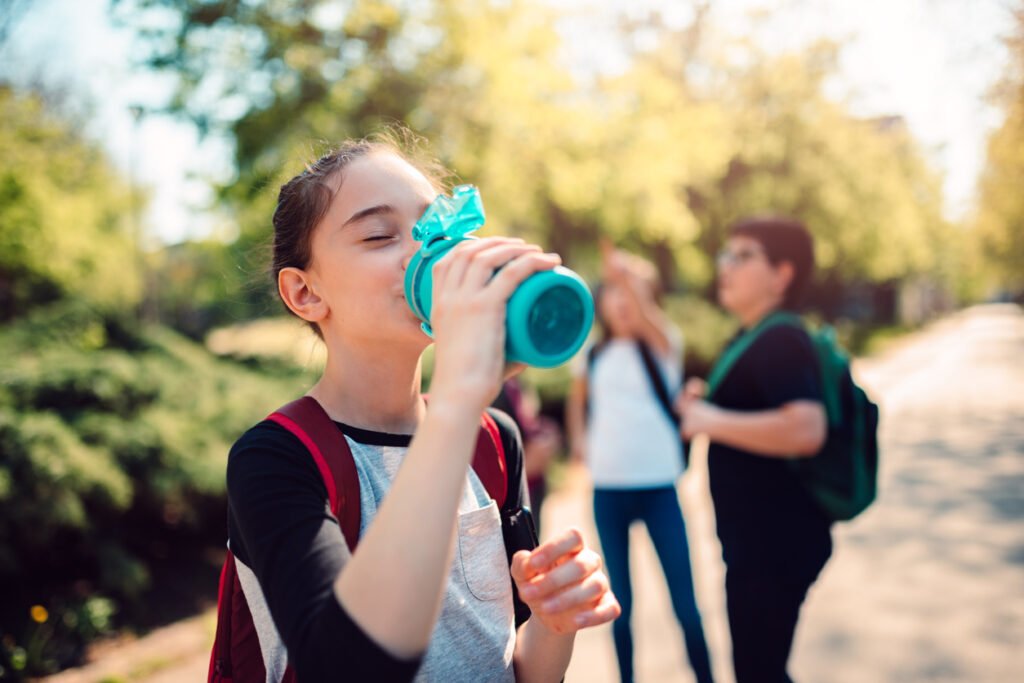
This is the gap that sits at the centre of junior sport in South Africa, and frankly in most countries where school sport is taken seriously. We hold young athletes to a performance standard, then leave them to figure out nutrition and hydration largely ontheir own. A parent might pack a water bottle. A tuck shop might sell a sugary sports drink. And that, for most young athletes, is the extent of the support.
There is a contradiction at the heart of how we treat junior sport right now. On one hand, there has never been more awareness of how little young people move. Screen time has displaced outdoor play at a scale previous generations would not recognise, and theresponse – from schools, gyms and sports bodies – has been to invest heavily in getting children active. Junior sport programmes are more structured, more competitive and more demanding than they have ever been. School rugby, for instance, is not a casualafternoon kickabout. It is organised, coached, periodised and taken seriously by players, parents and institutions alike.
On the other hand, the conversation about how to support those young bodies through that increased physical demand has barely started. We have raised the bar for junior athletic performance without raising our thinking around what those athletes need to performand recover. The gap between what we ask of young athletes and what we give them only widens as they get older.
The science here is not complicated, even if the messaging around it often is. Mild dehydration, the kind that sets in quietly during a training session long before a child feels obviously thirsty, measurably slows cognitive function, reduces alertness andimpairs reaction time. For a teenager trying to read a game and make decisions under pressure, that is not a minor inconvenience. It is the difference between a good performance and a poor one, between a sharp tackle and a missed assignment. Research fromthe Gatorade Sports Science Institute confirms that hydration patterns in young athletes affect a far wider range of physiological processes than most people assume, including growth, development and long-term health. The habits formed now shape the adultathlete that follows. And yet the guidance most young athletes receive amounts to: drink water and avoid energy drinks. Both points are correct but neither is complete.
Water is the right choice for most situations, before, during and after sessions lasting under an hour. Dr Andrew Nish of UnityPoint Health puts it plainly: water should be the beverage of choice for physical activity lasting less than an hour, and sports drinksare simply unnecessary in those circumstances. For shorter, lower-intensity sessions, regularly reaching for sugary sports drinks adds excess calories and, over time, contributes to tooth enamel erosion.
But the calculation shifts when the session is long and the intensity is high. A 90-minute rugby training session in summer heat is not a gentle workout, and plain water, however much of it a young athlete drinks, does not replace the sodium, potassium andcarbohydrates lost through sweat. Once exercise crosses that threshold of duration and demand, the body genuinely needs more than water to recover properly. Telling young athletes otherwise, in the name of keeping things simple, is doing them a disservice.
The counter-argument that tends to surface here is that supplements and sports nutrition are adult territory. I understand where that instinct comes from. The sports nutrition industry has not always done itself favours, and there are products that have absolutelyno place in the diet of a young person. Caffeine-loaded pre-workouts and stimulant-heavy energy drinks fall squarely into that category.
But that is a reason for discernment, not blanket avoidance. There is a meaningful difference between those products and an isotonic hydration drink formulated to replace what exercise depletes. Treating those two things as equivalent is how we end up witha generation of young athletes who either ignore nutrition altogether (because the subject feels too complicated or too “adult”) or who reach for the wrong products because nobody gave them a framework for choosing the right ones.
Age-appropriateness is the framework. It is not a complicated principle, but it requires people in positions of influence, coaches, parents, school sports administrators, to actually engage with the question rather than defaulting to silence on the topic.
Getting the basics right is not complicated. Water as the foundation. Electrolyte-based hydration introduced for longer, harder sessions. An understanding that sports drinks are a performance tool rather than a daily beverage, and that the sugar content inmost commercial options is a reason to choose carefully, not a reason to avoid the category entirely. And a recognition that young athletes who understand how to fuel their bodies carry that knowledge with them long after the final whistle.
That is why NPL’s Noordval Rugby sponsorship puts their Hydrade Range directly onto the sidelines of school rugby. If we are serious about closing the gap between what we demand of young athletes and what we give them, that is where it starts.
We would not put a young player on the field in the wrong boots, or without adequate coaching, or without appropriate protective equipment. It is time we applied the same logic to what we ask them to put in their bodies. Junior sport in this country demandsserious effort from the young people who participate in it; and they deserve a serious approach in return.
Author Bio: Andy Moore holds an MSc in Dietetics and has built her career across sport, nutrition and product science. As Research and Development and Quality Control Manager at NPL, she oversees the formulation and development of sports supplements,vitamins and CAM products from ingredient sourcing through to shelf. She concurrently holds the same role across Glowing Sky Distributors, a sister company within the same group. Before joining the group, she held senior positions at USN SA and Powdermix Technologies.She is responsible for ensuring compliance with SAHPRA food safety and pharmaceutical regulations across both businesses.